A formula checked against a nutrient standard
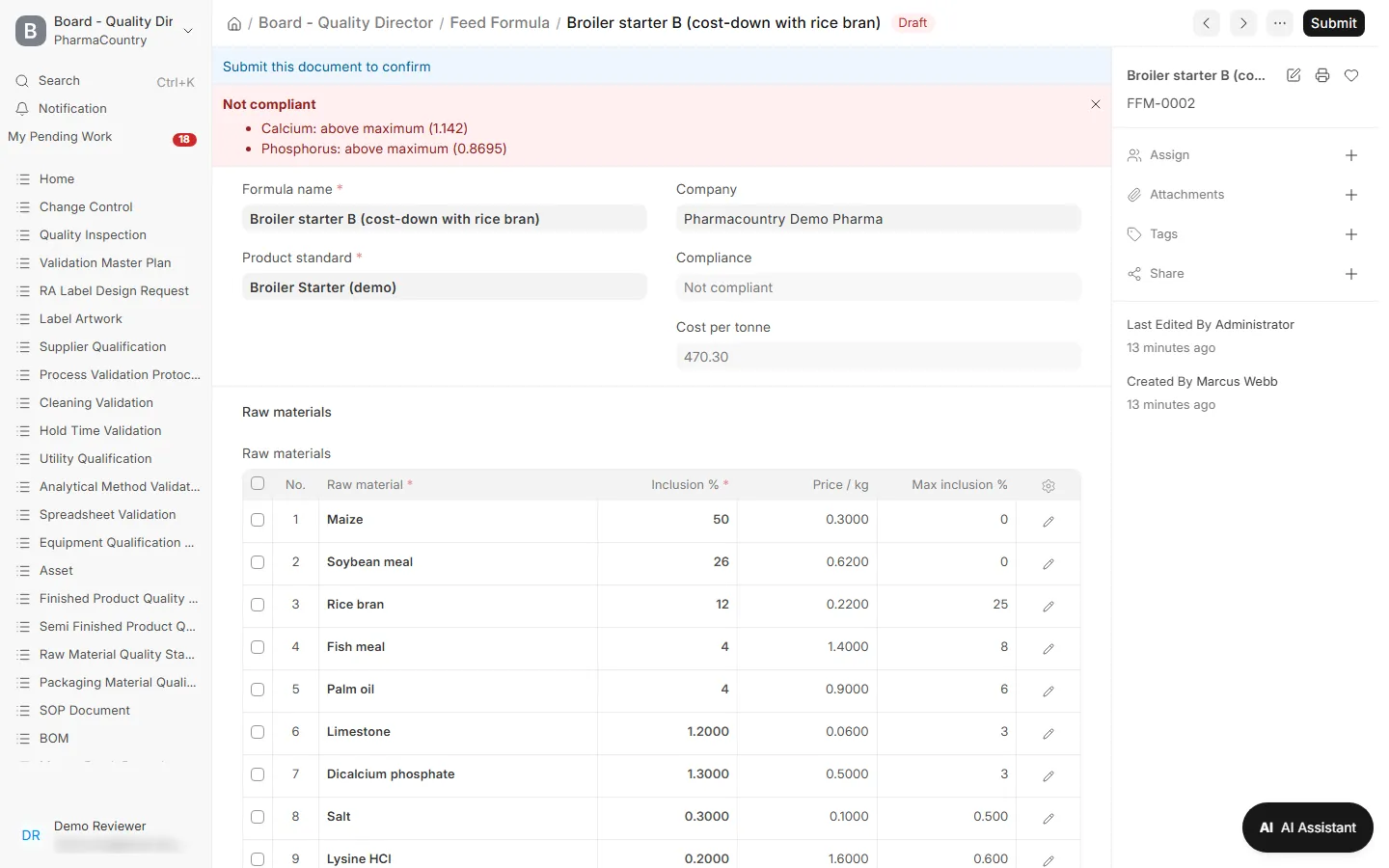
Nutrients are calculated from the raw materials and compared with the minimum and maximum of the product standard.
Software for feed formulation, production and traceability. Feed formulas, raw-material tests, blending batches and traceability through to dealers.
Choose by type of business; the Animal feed industry add-on costs $4,000 more.
Nutrients are calculated from the raw materials and compared with the minimum and maximum of the product standard.
Each delivery is tested (for example moisture and aflatoxin) and accepted or rejected against its specification.
The cost of a formula follows the price of its raw materials, so a price change shows up in the cost at once.
Built and demonstrated on sample data, and open in the demo system: request a demo and we issue an account. Limits, checklists and values in the demo are illustrations, not regulatory advice; each customer sets its own.
 (opens in a new tab)
Nutrients are calculated from the raw materials and compared with the minimum and maximum of the product standard.
Each delivery is tested (for example moisture and aflatoxin) and accepted or rejected against its specification.
The cost of a formula follows the price of its raw materials, so a price change shows up in the cost at once.
A lot of finished feed can be traced back to the raw-material lots in it and forward to the dealers who received it.
A company picks several. Core fit means the type is a main target for this industry; depends on scope means it fits for some products or activities.
An illustrative process to discuss scope. It is not imposed on any company, and the software families named in each step are the ones that can take part.
A formula is built from raw materials against a product standard.
Deliveries are tested and accepted or rejected.
Batches are blended to the formula and recorded.
Finished feed is tested before release.
Feed is packed and held by lot.
Orders ship to dealers and farms.
Most important first. Each shows its real status.
The sample formula is marked not compliant because calcium and phosphorus are above the maximum of the standard.
A receipt test compares the result with the raw-material specification and decides accept or reject.
Raw-material prices feed the cost per tonne shown on the formula.
Dealers are customers whose trade licences are checked when an order is approved.
These are examples of requirements that may apply, depending on the product, the activity and the market. They are not a claim that the software meets any of them.
Demo roles to ask for: R&D, QC Manager and QC Analyst, Distribution Manager
Signing in needs a demo account, issued after you request a demo. The data is sample data of a fictional company.
No. It calculates the nutrients and the cost of a formula you build and compares them with the product standard. Automatic least-cost optimisation is not part of the demo.
The demo shows moisture and aflatoxin on receipt, with accept or reject against the specification. Other parameters are configured per project.
Yes. The formula and receipt modules work for any feed, including fish and shrimp feed. Farm operations are not part of our software.
Describe your business and the processes you want to digitise. We reply with next steps.