Formula versions and ingredient limits
Ingredients have limits that depend on how the product is used (left on the skin or rinsed off), and a formula change must be versioned.
Manage cosmetic products from formula to retail. Formulas, ingredients, packaging, product files and contract manufacturing through to the retail channel.
Choose by type of business; the Cosmetics industry add-on costs $3,000 more.
Ingredients have limits that depend on how the product is used (left on the skin or rinsed off), and a formula change must be versioned.
The label artwork and the packaging components are linked to the product, so a change in one is not missed in the other.
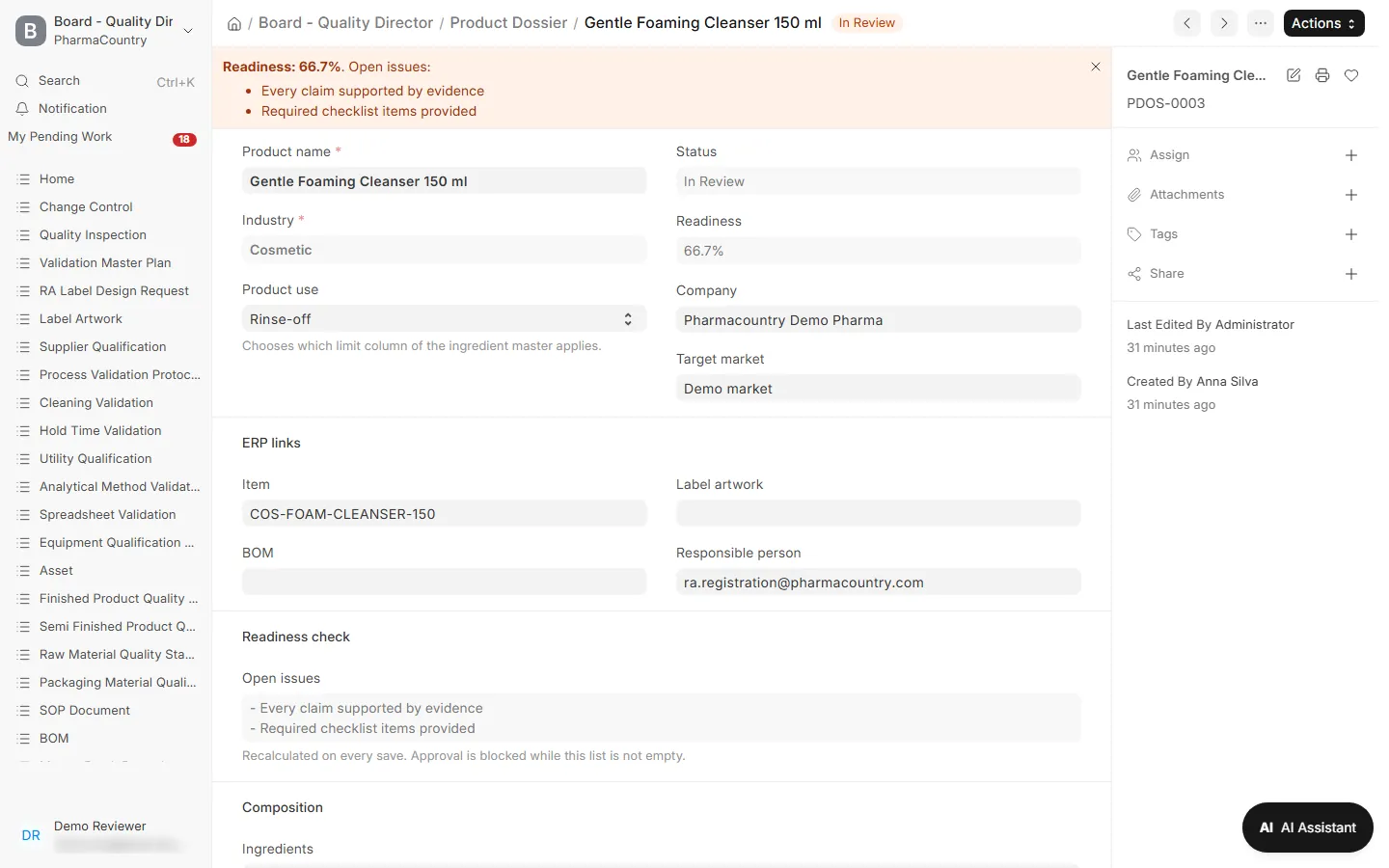
Formula, safety assessment, manufacturing evidence and claims are gathered in one file per product, with a view of what is missing.
Built and demonstrated on sample data, and open in the demo system: request a demo and we issue an account. Limits, checklists and values in the demo are illustrations, not regulatory advice; each customer sets its own.
 (opens in a new tab)
Ingredients have limits that depend on how the product is used (left on the skin or rinsed off), and a formula change must be versioned.
The label artwork and the packaging components are linked to the product, so a change in one is not missed in the other.
Formula, safety assessment, manufacturing evidence and claims are gathered in one file per product, with a view of what is missing.
Many brands make through partners and sell through shops, distributors and online; stock and batches must follow the product.
A company picks several. Core fit means the type is a main target for this industry; depends on scope means it fits for some products or activities.
An illustrative process to discuss scope. It is not imposed on any company, and the software families named in each step are the ones that can take part.
The concept, target market and use of the product are defined.
Ingredients and amounts are set and checked against limits.
Raw materials and packaging are bought and held by batch.
The plant makes the product to the approved formula; batch results come back.
Finished goods are held by batch and expiry.
Stock is sold through distributors and stores and replenished from reorder levels.
Most important first. Each shows its real status.
The sample dossier shows readiness in percent, the open issues above the form and the checklist that must be closed before QA can approve.
The assessor, the conclusion, the date, and the manufacturing certificate with its validity are kept in the dossier.
The label artwork is a field of the dossier, so a label change travels with the product record.
The near-expiry report lists the earliest batches first with an action for each, from selling first to quarantine.
These are examples of requirements that may apply, depending on the product, the activity and the market. They are not a claim that the software meets any of them.
Demo roles to ask for: Regulatory Affairs, QA Manager and QA Officer, R&D, Store Manager and Cashier
Signing in needs a demo account, issued after you request a demo. The data is sample data of a fictional company.
No. It keeps the limits your team sets next to the formula and shows where the formula goes beyond them. The limits in the demo are illustrations.
Yes, brand owners and contract production are among the main types of business. The order to each plant, the batch results and the stock stay in one system.
Store replenishment and near-expiry stock are available. Counter sales (POS) are planned and not yet delivered as a module.
Describe your business and the processes you want to digitise. We reply with next steps.