Batch and expiry control
Stock is held by batch and expiry from the plant to the dealer, and batches near their expiry are acted on first.
Connect veterinary manufacturing and distribution. Batches, tests, target species, withdrawal periods and dealer channels for veterinary medicine makers and distributors.
Choose by type of business; the Veterinary medicines industry add-on costs $3,000 more.
Stock is held by batch and expiry from the plant to the dealer, and batches near their expiry are acted on first.
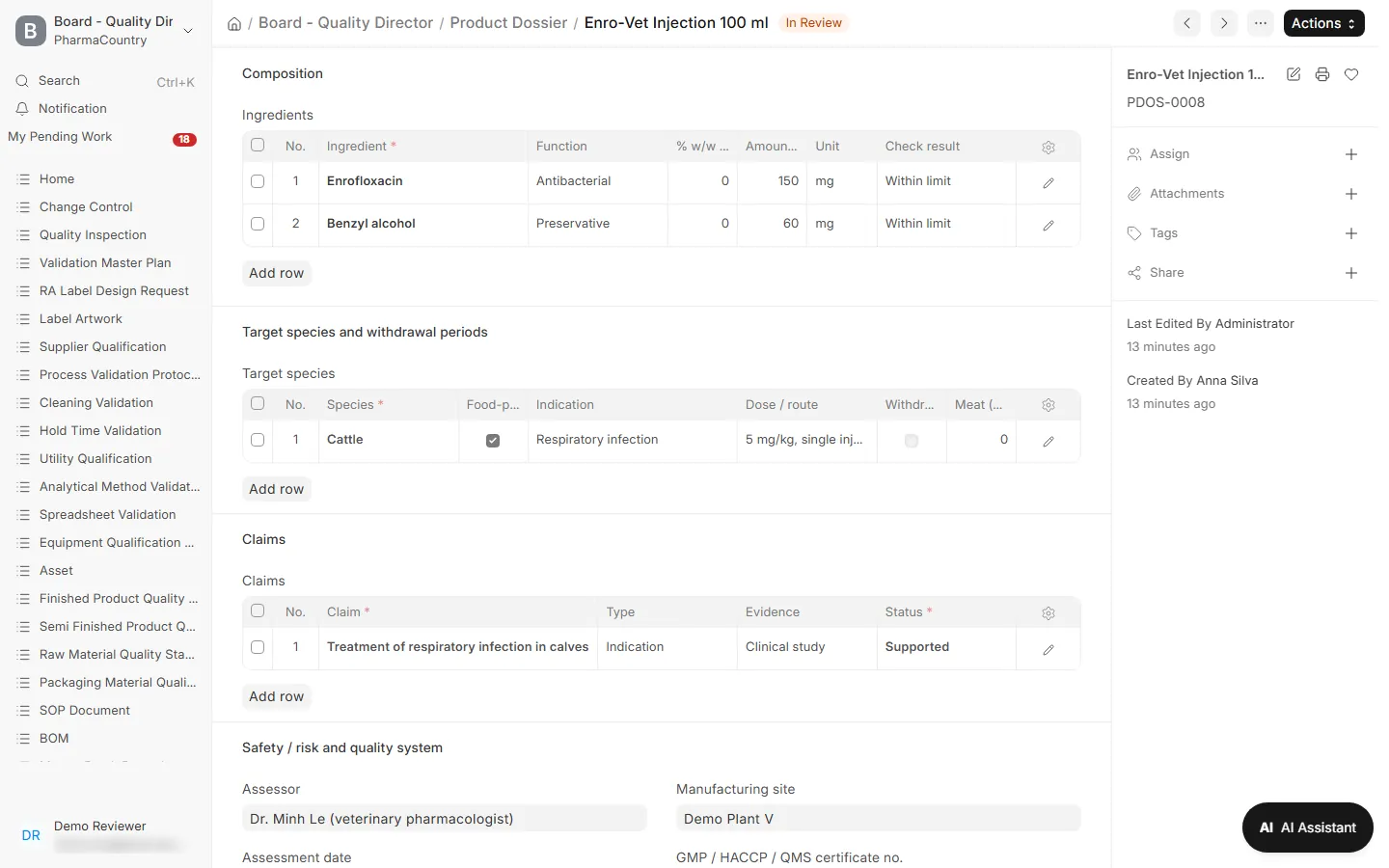
For species that produce food, the withdrawal period has to be stated before a product can be approved.
Sales run through many dealers; each one has its own licence, orders and returns.
Built and demonstrated on sample data, and open in the demo system: request a demo and we issue an account. Limits, checklists and values in the demo are illustrations, not regulatory advice; each customer sets its own.
 (opens in a new tab)
Stock is held by batch and expiry from the plant to the dealer, and batches near their expiry are acted on first.
For species that produce food, the withdrawal period has to be stated before a product can be approved.
Sales run through many dealers; each one has its own licence, orders and returns.
Reports of an adverse event are logged, reviewed and closed with a recorded outcome.
A company picks several. Core fit means the type is a main target for this industry; depends on scope means it fits for some products or activities.
An illustrative process to discuss scope. It is not imposed on any company, and the software families named in each step are the ones that can take part.
Materials are bought and held by lot.
Batches are made to the master record.
Samples are tested and results kept with the lot.
Released batches enter stock with their expiry dates.
Orders ship to licensed customers.
Dealers are supplied, and near-expiry stock is acted on.
Most important first. Each shows its real status.
In the sample dossier cattle is a food-producing species with no withdrawal period stated, so QA approval stays blocked.
The log of adverse events in animals has closure rules, so a report cannot be closed without its outcome.
In the demo a sales order for a veterinary clinic is refused at approval because its trade licence has run out.
The near-expiry report sorts batches by expiry date with the days left and what to do with each.
These are examples of requirements that may apply, depending on the product, the activity and the market. They are not a claim that the software meets any of them.
Demo roles to ask for: Regulatory Affairs, QA Manager and QA Officer, Distribution Manager
Signing in needs a demo account, issued after you request a demo. The data is sample data of a fictional company.
No. It makes sure a period is stated for every food-producing species before QA can approve the dossier. The value itself comes from your veterinary and regulatory team.
Dealers are customers with their own licences, orders and returns. Customer-management features (CRM) exist in the ERP core; a packaged CRM module is planned.
No. The software is for companies that make, import or distribute veterinary medicines. Farm and processing operations are not part of it.
Describe your business and the processes you want to digitise. We reply with next steps.